Respect vs. Courtesy: What’s the Difference—and Why Both Matter
Respect and courtesy are words we hear all the time, but many people use them as if they mean the same thing. In reality, they work together—but they are different. Understanding the difference helps young adults build stronger relationships, become better leaders, and carry themselves with confidence both on and off the mat.
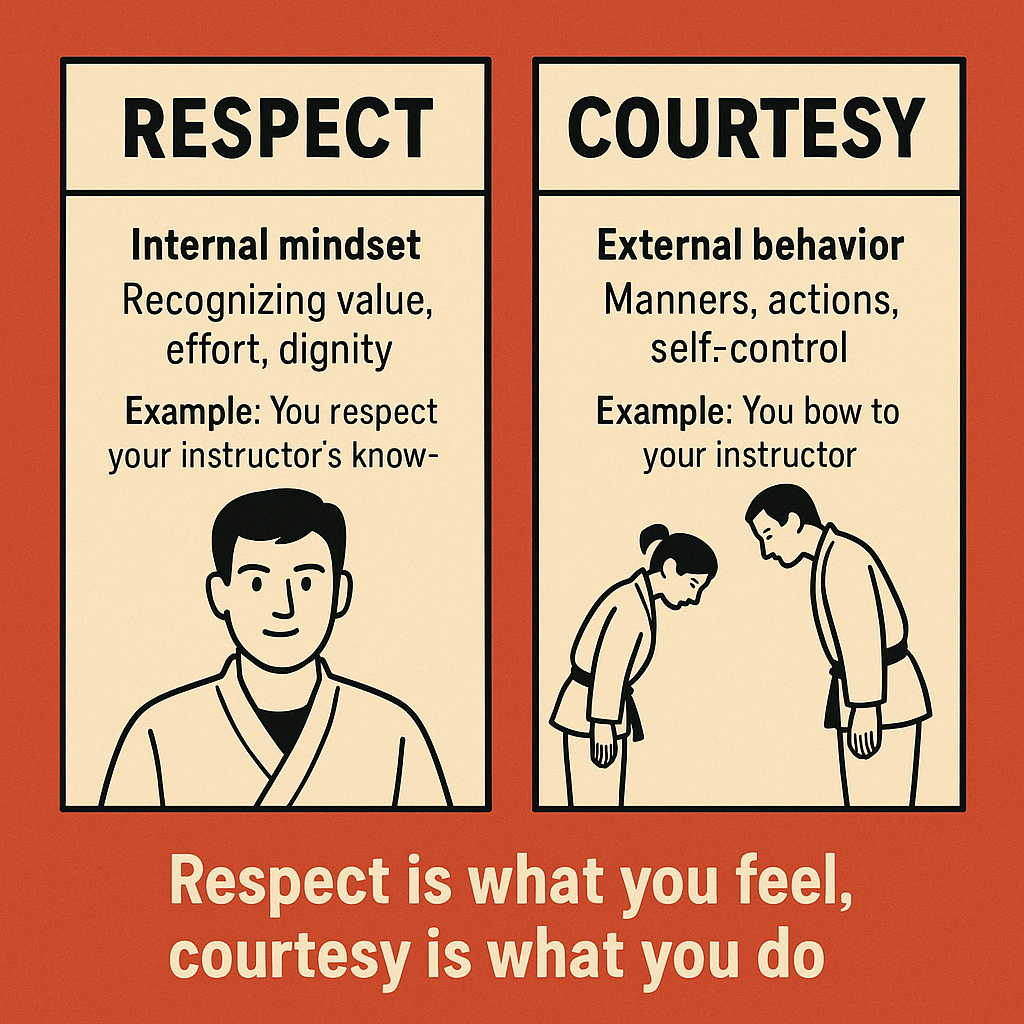
Respect is an internal mindset. It’s about recognizing the value, effort, and dignity of others—and yourself. Respect grows through understanding, experience, and character. You might respect a coach for their knowledge, a teammate for their work ethic, or a classmate for their perseverance. Respect isn’t about agreeing with everyone; it’s about acknowledging their worth even when opinions differ.
Courtesy, on the other hand, is external behavior. It’s how respect shows up in your actions. Courtesy includes manners, tone of voice, body language, and self-control. Saying “yes sir,” holding the door, listening without interrupting, and bowing on the mat are all examples of courtesy. Courtesy can be practiced even when emotions are high—and that’s what makes it powerful.
The key difference is this: respect is what you feel and believe; courtesy is what you do. A young adult might not fully respect a new instructor yet, but they can still show courtesy by paying attention and following directions. Over time, consistent courtesy often leads to genuine respect. In martial arts—and in life—this is why behavior comes first. Actions shape mindset.
Youth and adults can practice both respect and courtesy every day. Youth can show courtesy by listening, using respectful language, and being a good training partner; they build respect by appreciating others’ effort and learning from correction. Adults practice courtesy by staying calm, being punctual, and leading by example; they demonstrate respect by valuing others’ time, boundaries, and growth. When respect and courtesy work together, they create trust, discipline, and strong character—skills that last far beyond the dojo.